 Official State of Rhode Island Website


 Official State of Rhode Island Website

CRMC is coordinating with the USACE to perform another Providence River dredging event to bring the shipping channel back to its authorized depths and widths. This project would include the construction of a Confined Aquatic Disposal (CAD) Cell in the Edgewood Shoals Area. The CAD Cell would be utilized for disposal of dredged material within the Providence River Shipping Channel, various shallow draft Federal Navigation Projects (FNP), and additional capacity for non-federal projects with disposal managed by CRMC over the next 20 years.
For more information visit the Army Corps of Engineers project page
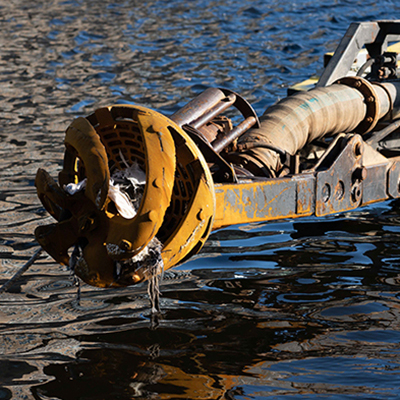
Removed material from the Amtrak bridge under the Providence Place Mall to the Crawford Street Bridge piers
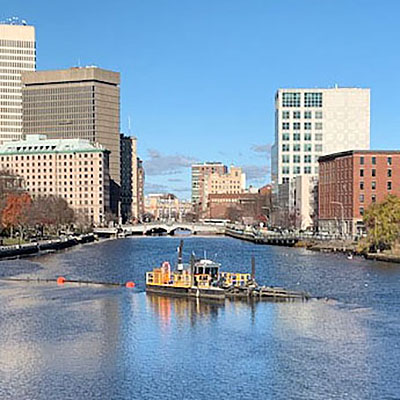
Maintenance dredging of the upper Providence River from the Crawford Street Bridge to the Point Street Bridge
The last significant dredging of the Providence River Shipping Channel was completed in 1971 by the Army Corps of Engineers (USACE), the federal agency responsible for its construction and maintenance. Since that time, a significant reduction in channel water depth and channel width occurred, a result of sedimentation in the channel, which prompted the US Coast Guard to restrict large vessel traffic to one-way passage for safety. In 1996 the CRMC was tasked with the responsibility on behalf of the state to coordinate the USACE's efforts to maintain this channel's authorized navigable depths and by 2003 the shipping channel was dredged back to its authorized depths and widths.
The work included maintenance dredging of the 15-foot-deep entrance channel into the harbor, as well as the eastern and western branch channels and the channel leading into Point Judith Pond. The channel had not been dredged since its construction in 1977. Natural shoaling reduced the channels’ depth over the years, making navigation hazardous during low tides. Approximately 90,000 cubic yards of sand was removed from about 25 acres of the area, and restored the entrance channel and other channels to original depths and dimensions, according to the USACE. The dredged material was used to help replenish a near-shore sandbar off Matunuck Beach in South Kingstown.
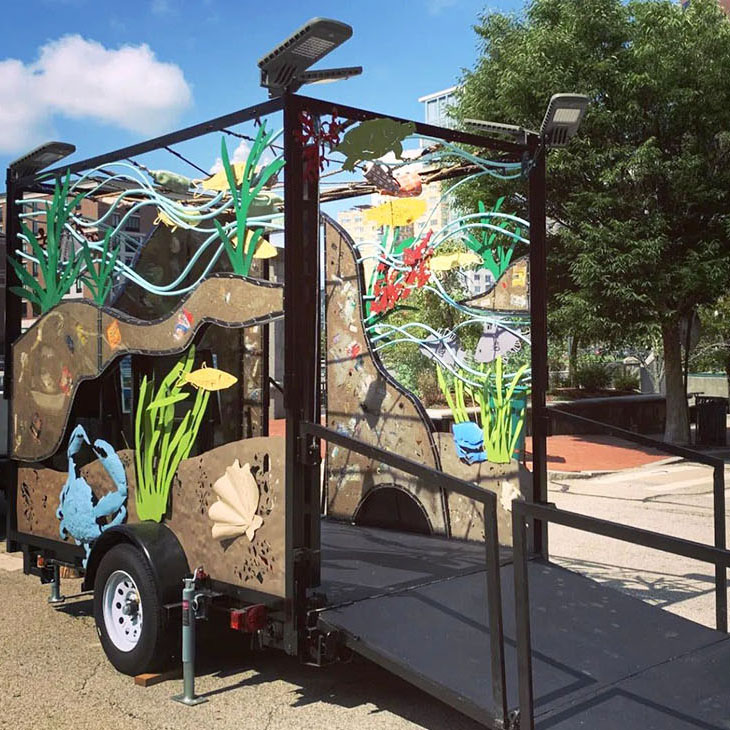
Trash and debris collected from the dredging of Waterplace Park and adjacent section of the river into a traveling educational art installation
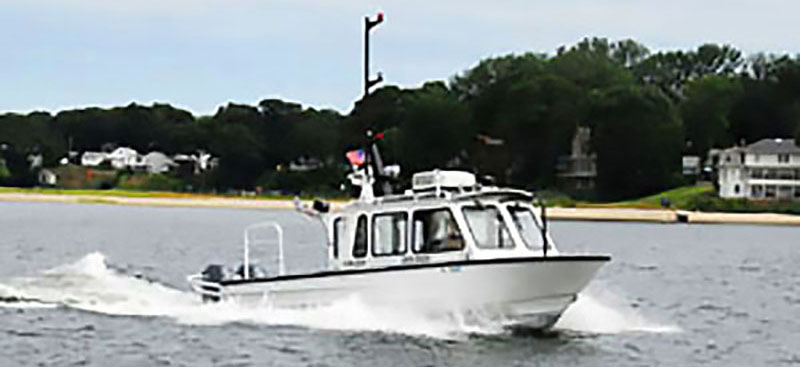
The CRMC is also able to monitor ongoing projects like the submarine disposal, federal dredging and disposal projects, and ensure compliance of other projects/operations by making weekly site visits and day trips.
Stedman Government Center, Suite 3
4808 Tower Hill Road
Wakefield, RI 02879-1900
Voice: (401) 783-3370
Office Hours:
Monday – Friday
8:30am – 4:00pm